Tuesday, December 10, 2013

Sumblog 13- Wallerstein


“It is and has always been a world-economy. It is and has always been a capitalistic world-economy”. These were the words of Immanuel Wallerstein, a man who saw society as a machine. He thought that every individual needed to fill a role and within a society there was a need for “winners” and “losers”. Individual profit is a goal in a capitalistic economy- this seems to always take precedence over one’s well-being in a capitalistic economy. Competition is also important for survival in a capitalistic economy. I thought these very simple theories did a great job summing up living in the United States. I think although it may not seem fair to have a gap between the rich and the poor, or winners and losers, it is very necessary in the success of a society. If everyone were equal it would be harder to have the tasks that were not desirable done. If doctors were paid the same amount as a cashier, would we live in a world where people strived to achieve more in their lives? It is hard to say, and I hope we never find out. I also think competition is an important piece of a capitalistic society. Without competition comes a monopoly. I think it is very dangerous to have very few in control, perhaps which is when a society collapses on itself.


I choose this cartoon for my sumblog because I think it does a great job showing how messed up our priorities become in a capitalistic society. Everyone is out for themselves and money, while few people are interested in “truth” or what is right. I think this kind of living may be contagious within a society. It would be harder to live a life not focused on money in a world that revolves around it. 


Sumblog 13- Wallerstein


“It is and has always been a world-economy. It is and has always been a capitalistic world-economy”. These were the words of Immanuel Wallerstein, a man who saw society as a machine. He thought that every individual needed to fill a role and within a society there was a need for “winners” and “losers”. Individual profit is a goal in a capitalistic economy- this seems to always take precedence over one’s well-being in a capitalistic economy. Competition is also important for survival in a capitalistic economy. I thought these very simple theories did a great job summing up living in the United States. I think although it may not seem fair to have a gap between the rich and the poor, or winners and losers, it is very necessary in the success of a society. If everyone were equal it would be harder to have the tasks that were not desirable done. If doctors were paid the same amount as a cashier, would we live in a world where people strived to achieve more in their lives? It is hard to say, and I hope we never find out. I also think competition is an important piece of a capitalistic society. Without competition comes a monopoly. I think it is very dangerous to have very few in control, perhaps which is when a society collapses on itself.


I choose this cartoon for my sumblog because I think it does a great job showing how messed up our priorities become in a capitalistic society. Everyone is out for themselves and money, while few people are interested in “truth” or what is right. I think this kind of living may be contagious within a society. It would be harder to live a life not focused on money in a world that revolves around it. 

Monday, November 25, 2013

Sumblog 11: The Standpoint Approach

This week we spoke more about Dorothy Smith, a woman who we met earlier in the semester. This time we learned of her work known as the “Standpoint Approach”. Dorothy saw that “the only way of knowing a socially constructed world is knowing it from within”. I could not agree more with this statement. I think it is important to realize that as thinking beings we are all biased in ways we cannot avoid based on our own personal experiences. We a lot more likely to get a “false reading” of a situation from an outsiders perspective. For example, when a CEO comes into a company for a brief time and makes large accusations based on his or her own perspective they are unlikely to get an understanding of how the company is truly being run. If the same CEO were to try a different tactic, much like on “Undercover Boss”, and disguise oneself as a regular employee, said person would be more likely to experience the reality of how that company was being run. People, in my experience, are likely to change their work ethic when they know someone from corporate is going to be visiting my place of work. We make the place look flawless and do all that is expected of us; however, things are run far from perfection when it is known that we do not have someone coming to inspect. I see Dorothy’s sociology as being applicable today. I think the CEO would also benefit from an experience like this because perhaps they would see why things are not always run smoothly; it comes from reasons such as being understaffed and under-equipped which is out of the control of the employees trying to run the business.


I choose this clip because clearly there is miscommunication between the worker and the owner of the business. There may have been reasons why the business was being run the way it was, and maybe not, but it is easier to look in from the outside and say “you are doing this wrong, we are shutting the place down.” To me that seems like the easy way out and I think Dorothy would say the Standpoint Approach would be beneficial to business. 

Tuesday, November 19, 2013

The Danger of Symbols- Sumblog 10

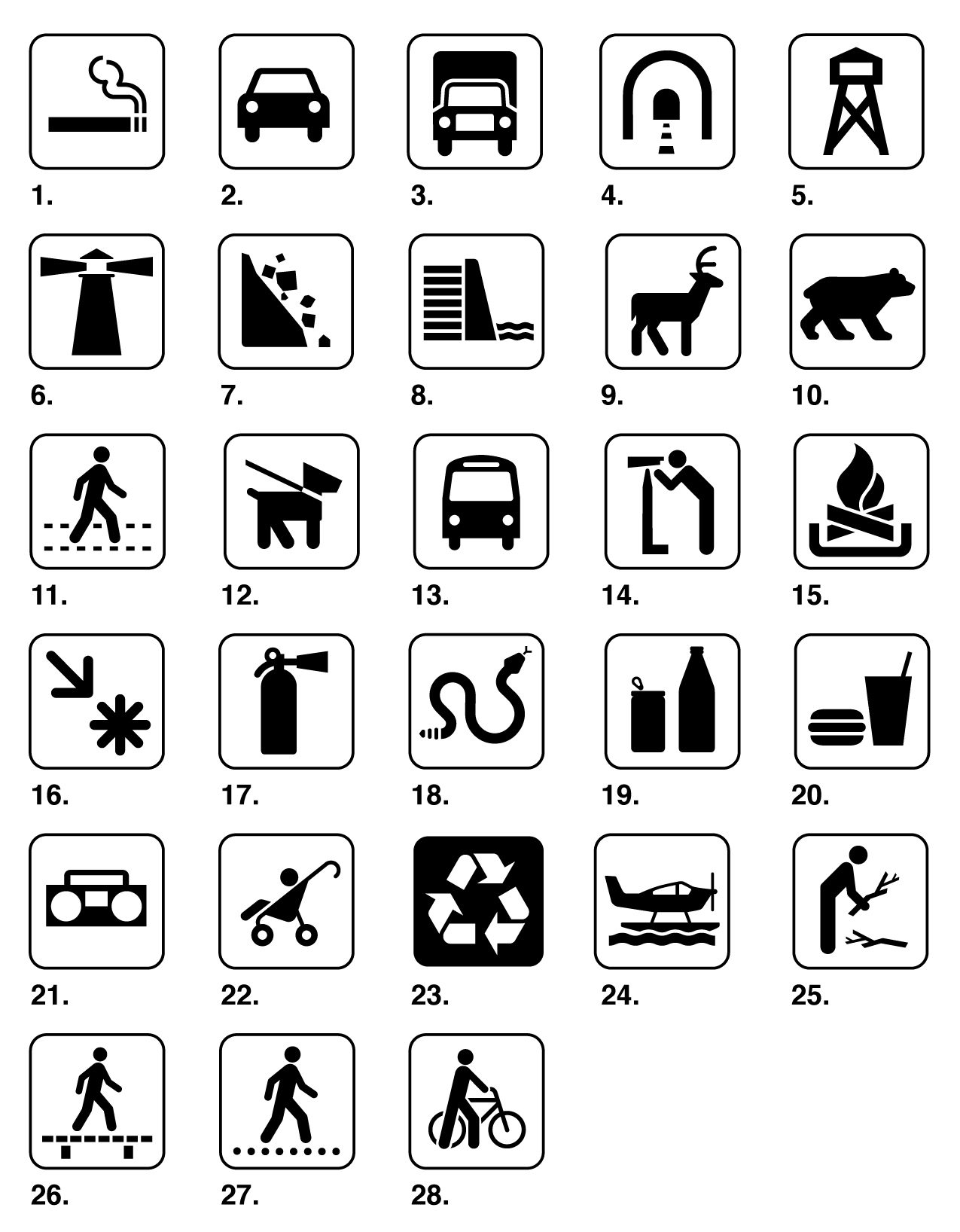
We encounter many symbols on a regular basis. We live in a world with an emphasis on visuals. Visuals make are a fast way for our brains to categorize without much thought. One example of a symbol that we see daily is the handicap symbol, a stick figure in a sitting position on a wheel. This is made a symbol in our culture because it indicates that whatever holds the symbol is “user friendly” or prohibited use, such as a parking space. People continue to understand the value of this particular symbol because we see it all around us. There are many benefits and risks of symbols. I think the biggest benefit with symbols is that they can be see and simply understood. On the flip side of that, there can be an over generalization or stereotype attached to a symbol based on our past experiences. They can be helpful to a society because when we see something like a simple drawing, take for example the stick figures that differentiate a men’s or women’s restroom, we are able to distinguish the difference. Again, they can be harmful for the same reason. Someone who did not understand our meaning of the symbol may be confused by our over use of symbols. If you think about how many symbols we depend on in a day, without meaning attached to those, to some we may live in an over simplistic society. We put a lot of pressure on those within a society to recognize and understand the symbols we use so frequently. I think overall it is important to remember that all symbols are not universal and we should not hold a single meaning to a certain symbol.


I choose to include a picture of 28 frequently used symbols that often used. We may not think much about them because we have been exposed to them for so long, but they may be very intimidating to someone who has just moved here and is trying to learn the cultural norms. 

Tuesday, November 12, 2013

Sumblog 9- Presentation of Self

Erving Goffman had a very interesting perspective of the world, making me think he must have been an artist. The way he perceived people around him to be putting on a performance makes me think that he was a creative man. He was able to see that people hold a lot of power with just words and actions, material and non-material things. Power and authority is given to an individual when they realize they are able to paint a picture of anything they want, and it's up to them to make it a reality. Looking at life as a stage makes a lot of sense. We all wear so many "hats", ever throughout a 24 hour period. You may be a boss in the morning, a friend in the afternoon, a cook and maid in the evening and a mother in the wee hours of the night. I think it is important for people to feel the "freedom" of changing who they are to others. Realizing your past does not have to define you can be very empowering. Goffman said through self-labeling we are able to create an identity that one may present to others in an attempt to manage an impression. I personally think it is great to live in a world where change is not only accepted, but encouraged.

http://womenssuccesscoaching.com/2009/03/how-many-hats-can-a-woman-wear-in-one-day/

I choose to use this link because I think it is a great visual to how many "hats" are worn in a day. This link just talks about women, but of course everyone must fill these roles. Goffman had so many great theories when it came to people in general. My favorite point he made was that there are multiple "plays" and "dramas" going on at the same time. We have all learned to adapt to these roles and somehow figured out what goes where, even when it comes to personality and authority, we all seem to find our place without needing direction from others.

Tuesday, November 5, 2013

The Stranger- SumBlog 8

"Despite his being inorganically appended to it, the stranger is still an organic member of the group. Its unified life includes the specific conditioning of this element. Only we do not know how to designate the characteristic unity of this position otherwise than by saying that it is put together or certain amounts of nearness and of remoteness." Georg Simmel had a very unique prospective of the sociological construction of society. The Stranger, according to Simmel, is someone who conforms to a group without question, yet is still distant from those within the same group. He references "nearness" and "remoteness" I felt this was his definition of the two. The Stranger is an interesting theory to me because I think it is especially applicable today. If you think about all of the groups and cliques, even politically, in our society today, we are able to see that people blend together as one; yet they may be very distant or alone within that group. I think sociologists have been trying to break down the social construction of society for centuries because it is not an easy thing to do. I think Simmel did a great job looking at the big picture and realizing that even though we are "one in the same" we are all very different and strangers at the same time.

I

I choose this cartoon because I think it does a good job demonstrating these ideas. Society is not something that can easily be picked apart and explained, but we are able to see that groups, or hierarchies are formed within all societies; which to me is a very interesting trend that should not be overlooked. Sadly, within a society, someone has to be at the bottom- the Stranger.

Tuesday, October 29, 2013

The Danger of the Veil- SumBlog7

"But the facing of so vast a prejudice could not but bring the inevitable self-questioning, self-disparagement, and lowering of ideals which ever accompany repression and breed in an atmosphere of contempt and hate." This idea by W.E.B. Du Bois was one that stuck out to me in this weeks reading. By "self-questioning and self-disparagement I think he was referencing the fact that we are all very different from one another, but this in not a bad thing or something that needs to judged. He had many ideas about identity and self. His theory of the "veil" is very applicable then and now. I think is impossible to live a life without some sort of "transparency" issues. We all see things differently based on our own life experiences (culture) which, sadly, may take precedence over reality. I think it is especially important to note that we all live a life of at least a double consciousness, if not a triple consciousness. I say this because we all tend to take on so many different roles which can be defining depending on the situation. We all have many identities that make up a master-identity. Those could include; mother, daughter, granddaughter, co-worker, student, friend, and so on. I think these identities are all incredibly important in the makeup of who we are and who we will become. For these reasons I think Du Bois was very advanced in his analyzing of the many roles humans must take on, and the many ways life can be interpreted.


I choose this picture because I think it does a good job showing how difficult it is to narrow down to one identity because there are so many elements that make an individual who they are. Overall, I think as Americans we are too focused on Nationalism and very insensitive to cultural relativism or anything that is unknown or new to us. I think this becomes a great danger when we are unable to see past our own "veil".

Tuesday, October 22, 2013

The danger of isolation- SumBlog6

"Isolation is a blunder." This seems to be the theme of Jane Addams The Settlement as a Factor in the Labor Movement writing. She expresses many time the importance of working together and looking out for one another in the workplace. "The social injury of the meanest man not only becomes its concern, but by virtue of its very locality it has put itself into a position to see, as no one but a neighbor can see, the stress and need of those who bear the brunt of social justice." I thought this was a perfect summary of what Addams is trying to tell the people. Basically, we are unable to see and feel the harsh working conditions of those below us until we are next to them. This is also important because she's sharing the importance of our self-awareness of those around us. I think this code of ethics she speaks of was born at this time and sets a necessary example in the workplace today. Without our code of ethics we would be working in the same harsh conditions today. "The labor movement may be called a concerted effort among the workers in all trades to obtain a more equitable distribution of the product, and to secure a more orderly existence for the laborers." The power of people working as a group cannot be underestimated. In order for them to see a fair work environment then and now people needed realize the potential they had when they came together. Going back to her "isolation is a blunder" quote, we are able to understand the emphasis she puts on this throughout this writing.

http://www.youtube.com/watch?v=PpuZgfB_yQI

I choose this clip because even though its focus is on politics, it relates to the things Jane Addams was talking about. Sticking together as a group for fairness and equality. Groups are more powerful than the individual. Being informed is key; understanding your rights and options.

Tuesday, October 15, 2013

Human Happiness- SumBlog 5

Happiness, defined by the Merriam Webster dictionary, is defined as the state of being happy or an experience that makes you happy. Looking further into that definition, happy is defined as; feeling pleasure and enjoyment because of your life, situation, ect.,  showing or causing feelings of pleasure and enjoyment, or pleased or glad about a particular situation, event, ect.  I found that there was a trend amongst these definitions. That trend was the tendency to point out a “state” or particular situation which may bring happiness. Harriet Martineau explored social life and said “the great ends of human association” aim above all “to the grand one, -- the only general one,-- human happiness.” I think she intended for this profound statement to be vague. I think happiness is ever-changing because it is dependent of your current situations. Generally when people assess their happiness they look to current events that they believe illustrate happiness. People live in the moment and tend to base feelings off the present. I think Martineau said that we are all looking to happiness because on some level it is universal. Maybe we all define happiness a little differently but in the end we all mean the same thing and strive to achieve it.


I choose this article from Psychology Today because I like the way it assess the data they found “First, there has been a shift in the US from a focus on happiness as a state that is caused from the outside through luck and prosperity to an internal emotional state that is under the control of the person.  Second, the view that happiness involves strong elements of external forces like luck is still common around the world, even if it is not common in the United States.” I think it is important to see the shift in the studies done about happiness and that there are many components, as the article says, that contribute to happiness. 

Tuesday, October 8, 2013

The Role of Rationalization Today- SumBlog 4


           Max Weber spent a lot of time talking about rationalization as “ideal type” and a historical force. He saw the role of rational forms as one of the most important characteristics of the development of Western society and capitalism. An ideal type is a “conceptual purity, a mental construct… and cannot be found empirically anywhere in reality. We create this construct to compare and define reality to what we believe it could, or should be. I found it interesting that you can break down each of Weber’s six basic characteristics of (Formal) Rationality and apply it to the way our society functions today. If you look at the big picture of our society and how those, for the most part, function within a society (criminals V. noncriminal, or the deterring of) I think we are able to see how the control from those with power affects our decisions. For example:
1.       Structures and institutions emphasize calculability
This to me means that people are able to calculate the consequences to their actions. You could look at this calculability as a “cloud” of knowledge that hangs over the people; if I murder I will go to jail and so on.
2.        The focus on efficiency
We live in a world that thing are done “quickly”. If you were to commit a crime, it would not take long before you were detained- we live in a pretty fast paced world where initial consequences happen quickly.
3.       Ensuring predictability
I think this goes hand-in-hand with the top two, the system is predictable.
4.       Replacing human technology with nonhuman technology
Through technology changes we have become a more efficient society when it comes to our nation/world-wide databases
5.       Systems seek control
I think control is found in knowing the repercussions. Would people act differently knowing there would be no consequences to harming one another?
6.       Systems tend to have a series of irrational consequences
This could explain how much power is held within these systems, and how it may spiral out of control.
Overall I think it is important to acknowledge that Weber was able to predict the important role that Formal Rationality plays in a society. This short video clip shows how relevant rationalization is to all aspects of the world we live in, which is why I choose to include it.


Sunday, September 29, 2013

What it means to be a "society"-Sum-Blog 3

In The Cultural Logic of Collective Representation Emile Durkheim  begins by questioning the role of region in society. He states that "the fundamental categories of thought, and consequently of science, are of religious origin." I felt that he was looking at religion, for the first time, as an ideal, created by individuals. He goes on to say that institutions have been born in religion. He felt there was too much focus on this intangible ideal that held "power" over the people. "For a society is not made up merely of the mass of individuals who compose it, the ground which they occupy, the things which they use and the movements which they perform, but above all is the idea which it forms of itself." This, to me, was the most profound idea in this week's reading. This is a statement that makes you question everything. A society is just that; an "idea". I think it is ironic that he points to the tangible things that people might say make a society; individuals, land, and the things we do to occupy our time here. This kind of abstract thinking impresses me, especially coming from a man who lived almost one hundred years ago. I think too often we are told something and never see reason to question it; Durkheim was different. I think he was able to remove himself from a "warped reality" (that which we create), and look at the big picture to ask why to the unknowns and unquestioned.

http://www.youtube.com/watch?v=iXQqMyMIAhI

I choose this video because I think it is important to understand where Durkheim came from, the time period, and (I'm assuming) structure that he grew up in. I think it makes his ideas and theories much more meaningful. He did not come from a time where people were encouraged to think "outside the box". I imagine this behavior was thought to be defiant so long ago.